Why It Matters

Forks of the Road is one of those historic places where you have to look beyond what is physically in front of you.

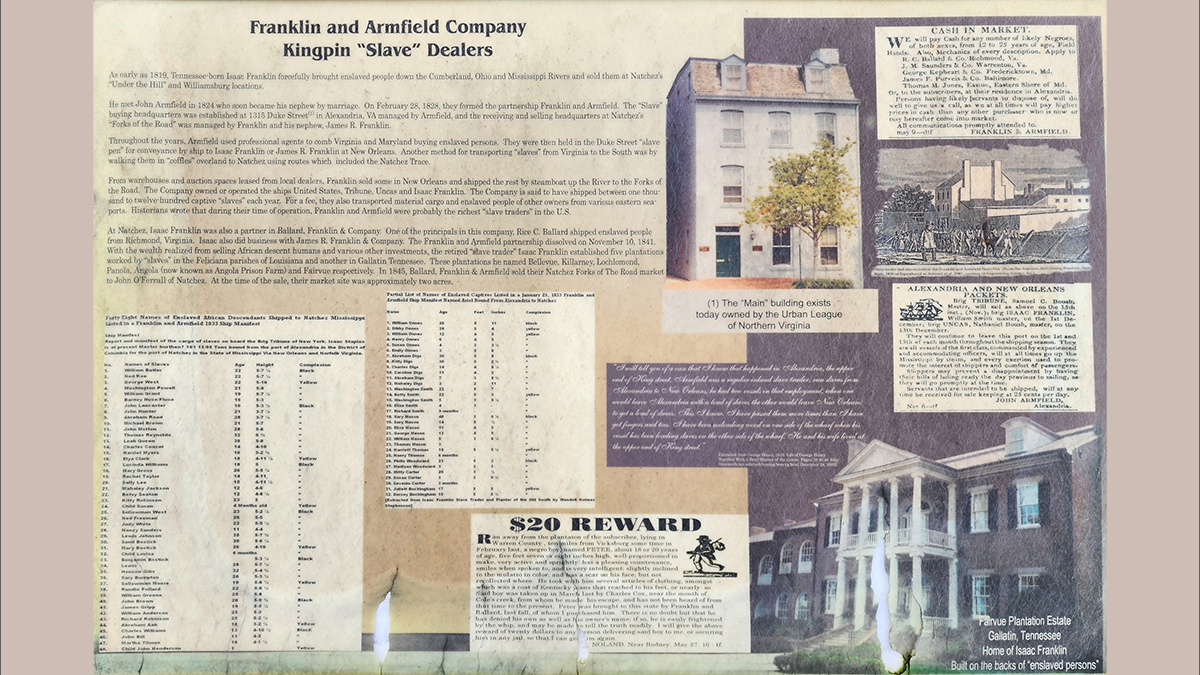
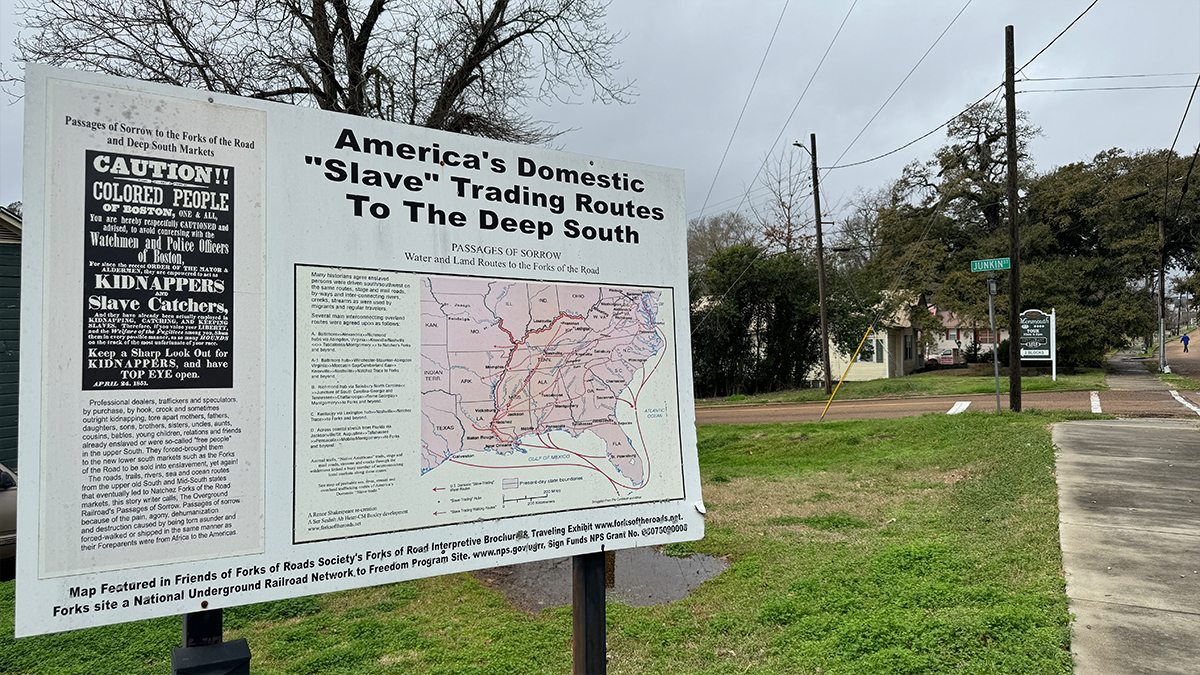
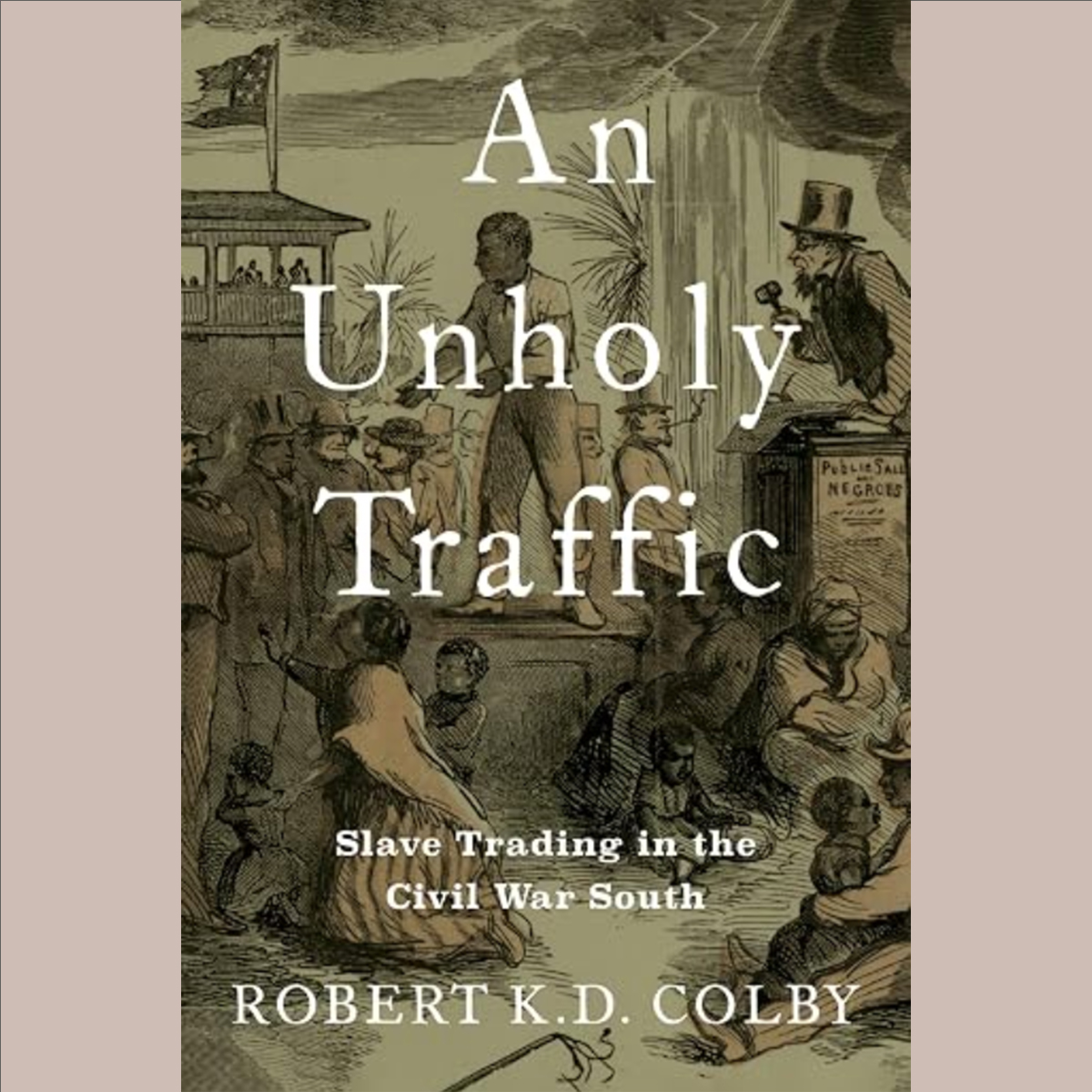
Before the Civil War, this crossroads, on what was then the outskirts of Natchez, Mississippi, was the second-largest domestic slave-trading hub in the Deep South. Tens of thousands of enslaved men, women, and children were forcibly marched or shipped from states such as Virginia, Maryland, Kentucky, and the Carolinas. They arrived in a region where the rapidly expanding cotton economy had created an enormous demand for enslaved labor.

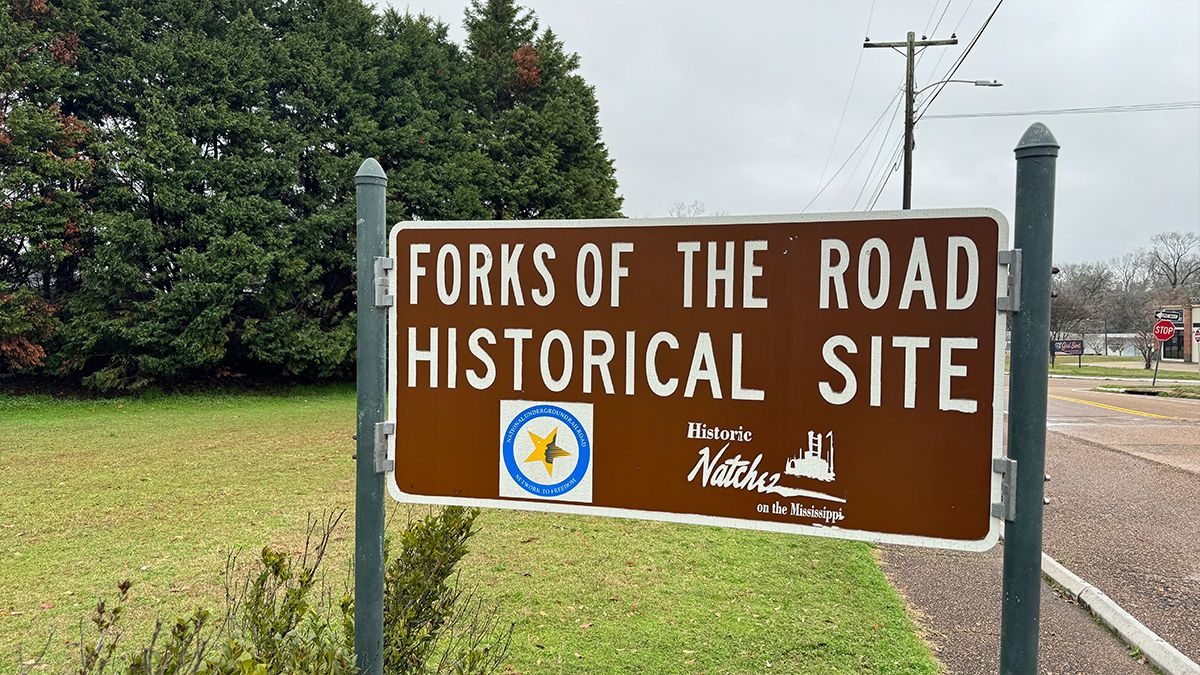
Today, the slave pens and trading businesses are gone. What remains is a relatively quiet intersection surrounded by small homes and businesses. But that absence is part of what makes Forks of the Road such a meaningful place.

It is important to understand that the wealth of the antebellum Cotton South was connected directly to individual human beings who were enslaved, not free. Forks of the Road was a place where families were separated, and where adults and children as young as four months old were bought and sold. Today, as you move farther into Natchez’s city center, you will see the grand houses and prosperous plantations built by enslaved people, many of which you can still visit. Without their forced, backbreaking labor, much of that prosperity would not have been possible.

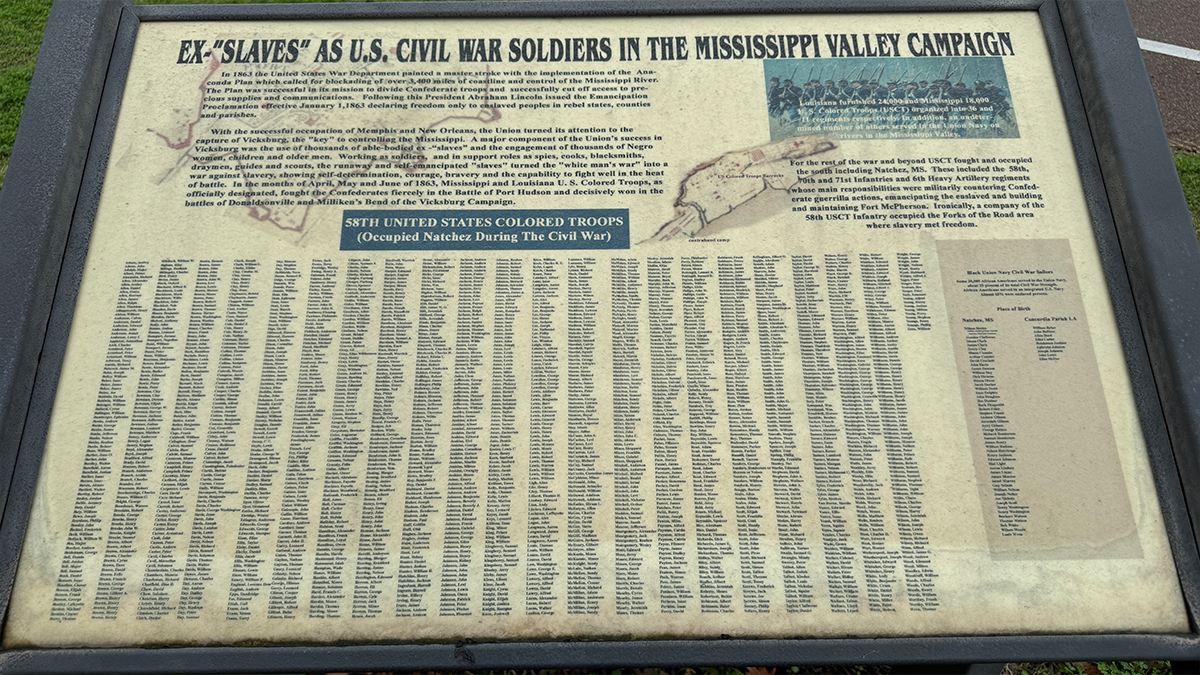
But Forks of the Road is not only a story of enslavement. When Union troops arrived in Natchez in July 1863, the slave market was effectively shut down. Many men who had once been bought or sold here seized the opportunity to claim their freedom, enlist in the United States Colored Troops, and return to this landscape not as property, but as armed soldiers of the United States.

Here's the Short Story

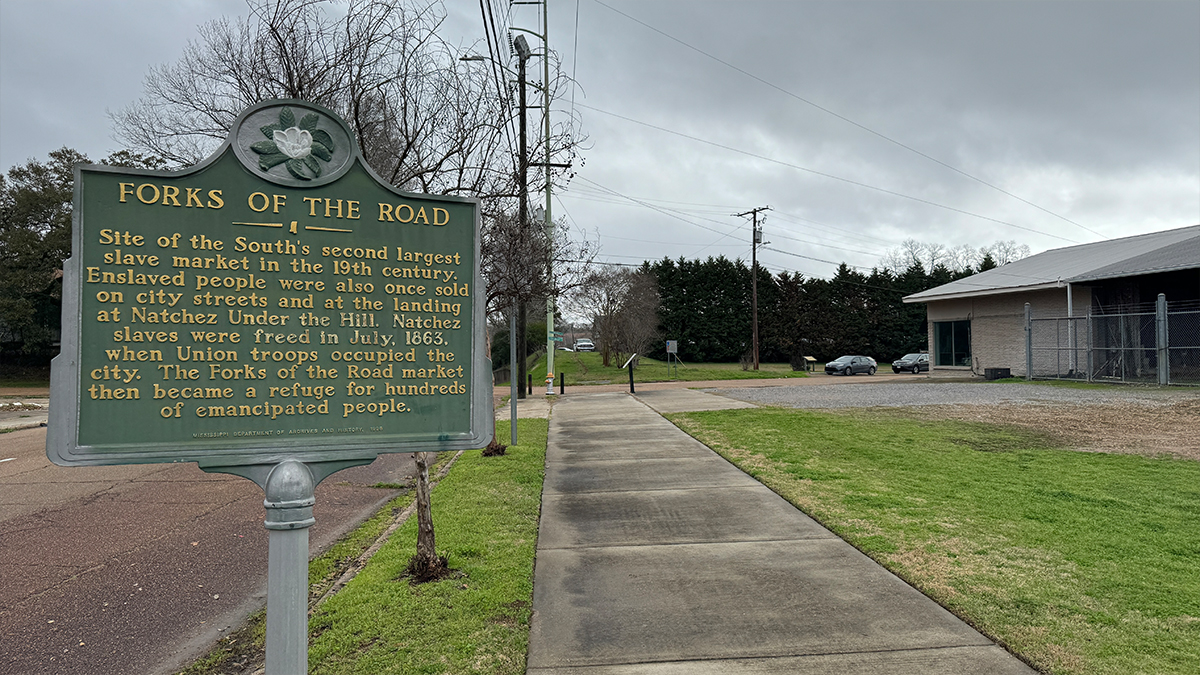
Slave trading had existed in Natchez, Mississippi, long before there was a place called Forks of the Road. But in 1832, amid fears surrounding a cholera epidemic, city officials ordered slave traders to move their businesses outside the city limits.

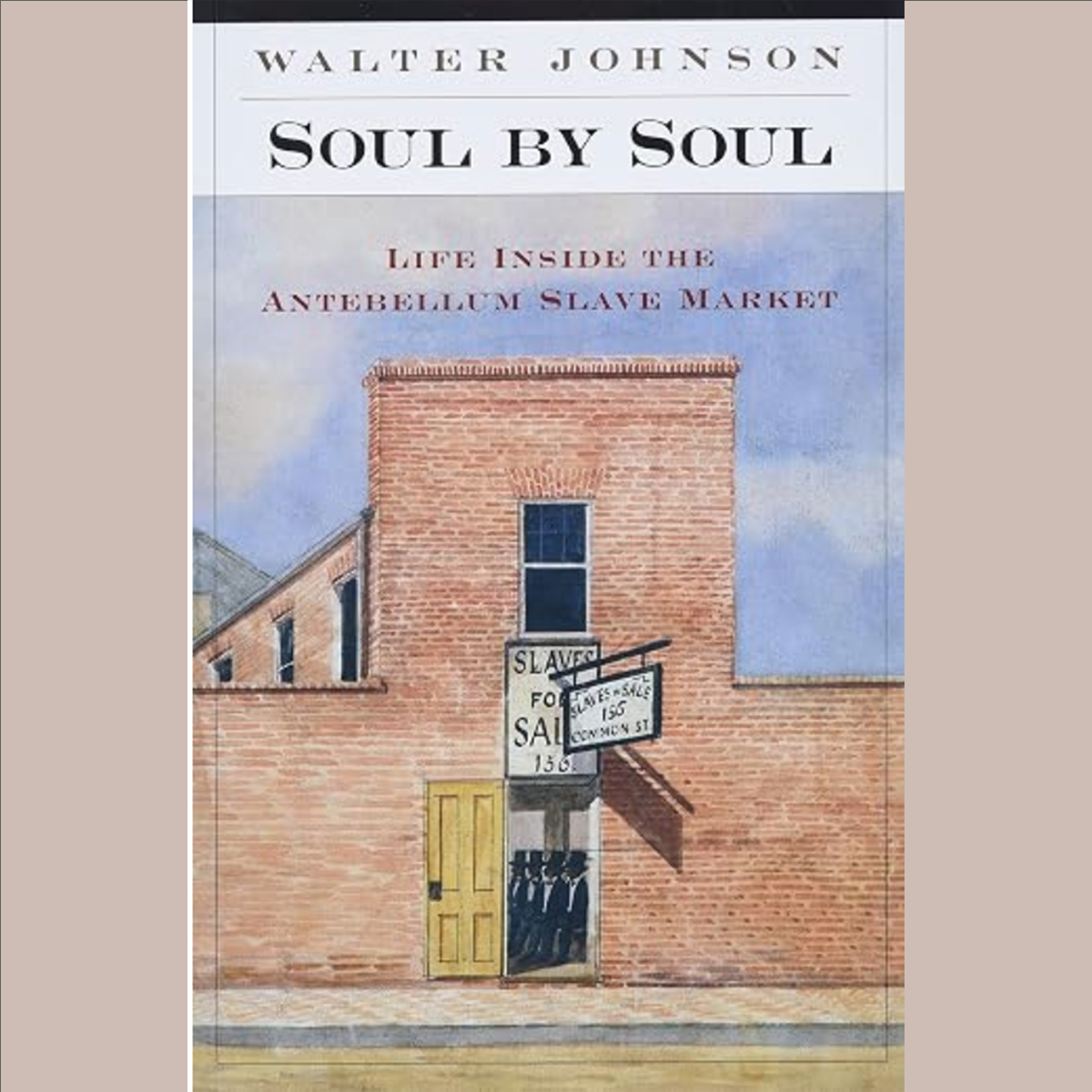
They settled near the junction of several important roads about a mile east of downtown Natchez. The location was ideal for the trade. Natchez sat at the center of a booming cotton region, steamboats connected the city to the Mississippi River system, and roads leading into Natchez carried travelers and commerce from across the South.

Beginning in the 1830s, Forks of the Road developed into a collection of slave-trading businesses. Enslaved people were brought south from the Upper South and held here until they were sold, sometimes individually and sometimes as families or groups, before being taken to plantations throughout Mississippi and the surrounding region.

The scale can be difficult to comprehend. Over roughly three decades, more than 200,000 people passed through the market, many of them between the ages of fifteen and twenty-five.

Then the Union Army, led by Brigadier General Thomas E. G. Ransom, reached Natchez approximately nine days after the fall of Vicksburg, seventy-two miles north of the city. Local residents were taken completely by surprise. Federal forces occupied Natchez on July 13, 1863, bringing the slave market at Forks of the Road to an end.

Shortly after the occupation began, Ulysses S. Grant arrived in the city and established his regional Union Army headquarters at Rosalie Mansion, a grand 1820s home overlooking the Mississippi River.

Word quickly spread about the Union forces at Natchez. Tens of thousands of newly freed people and freedom-seekers, many of whom had been bought or sold at Forks of the Road, flocked to the Union lines. Able-bodied men quickly enlisted, and most were organized into the 6th Mississippi Infantry (African Descent), later officially redesignated as the 58th U.S. Colored Infantry.

From August 1863 to April 1866, the regiment spent most of its service assigned to the Post of Natchez within the District of Vicksburg. Its primary mission was constructing and defending Fort McPherson, a massive Union fortification built on the bluff above Natchez. The presence of an armed, garrisoned Black regiment also served as a powerful deterrent against Confederate attempts to recapture the city.

Union soldiers later dismantled the old slave pens. The buildings disappeared, and over time much of the landscape was absorbed into the growing city.

That is why Forks of the Road can be difficult to understand when you first arrive. There is no preserved slave pen to walk through and no large building marking what happened here. Instead, you are standing in the surviving geography of the place, at the same crossroads where thousands of people once arrived without knowing where they would be taken next.
Take a Brief Tour

What to Look For

Start with the roads themselves. Forks of the Road was not an isolated location. Its position at an important crossroads helped make the site useful to slave traders moving people into Natchez and outward toward the plantations of the Deep South. Standing near the intersection helps make sense of why the market developed here.

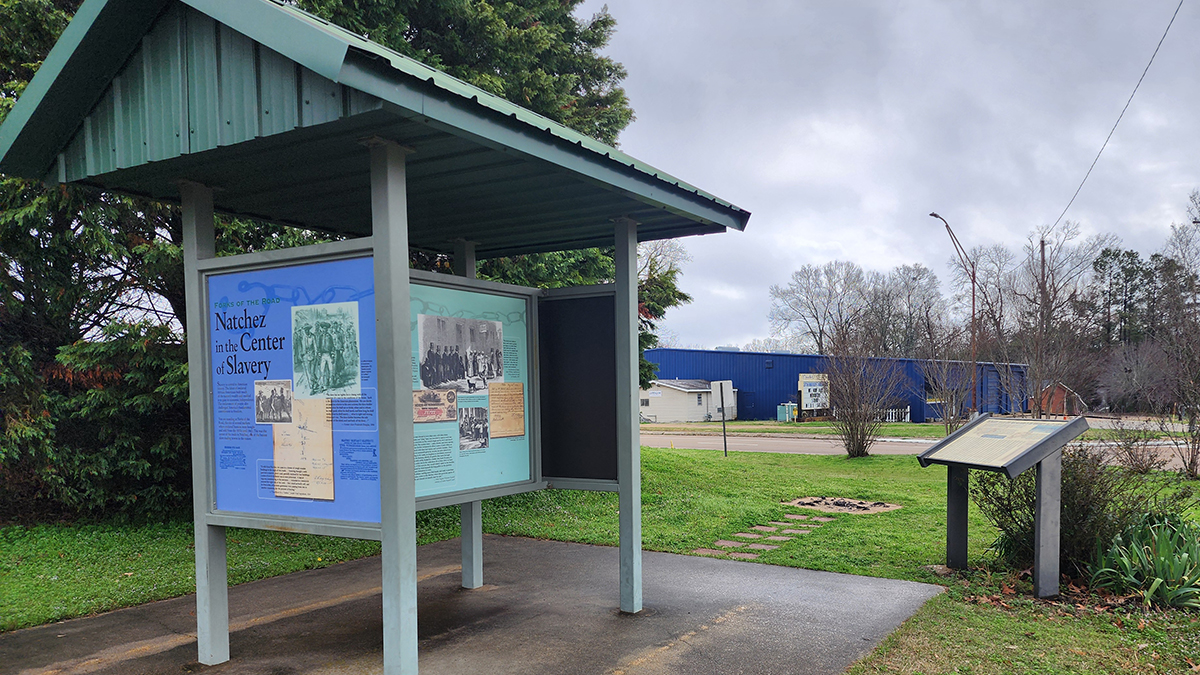
Take time with the new interpretive panels. The National Park Service installed a new series of markers at Forks of the Road in July 2026. Many draw from pension records left by formerly enslaved people and Black soldiers who had direct connections to this place. Look for their names and individual stories. One of the people featured is Elzira Bright, who was born in Kentucky, sold to a slave trader at nineteen, brought to Natchez with a group of approximately one hundred enslaved people, and sold here at Forks of the Road.

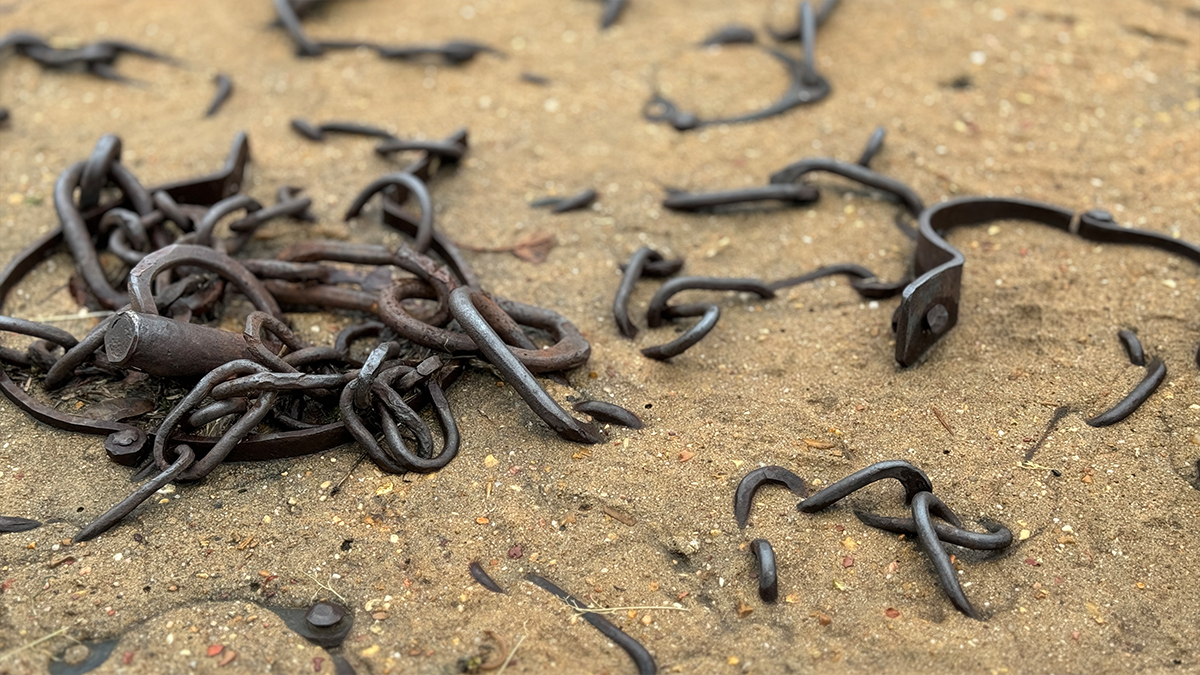
Look for the representation of chains and manacles embedded in the site. They are among the few physical interpretive elements that immediately communicate what this place represented: people being restrained, transported, confined, and sold.

But perhaps the most important thing to do here is to try to see beyond what surrounds you today.

Mentally remove the modern roads, traffic, signs, homes, and businesses. Imagine the wooden slave pens that once stood here, filled with people waiting to be sold. Picture the traders and buyers moving through the market, wagons arriving, people being lined up for inspection, and enslaved men, women, and children being presented to prospective buyers.

Then change where you place yourself in that scene.

Instead of imagining that you are standing outside the slave pen looking in, try to imagine what it meant to wait inside one. The fear went far beyond physical confinement. A stranger could walk through the gate, inspect your body, examine your teeth and scars, determine your value, and decide where you would spend the next part of your life. If your husband, wife, parents, or children were still with you, every potential buyer carried the possibility that your family could be separated permanently.

Even the way enslaved people were presented for sale reinforced how little control they had over their own lives. Historical accounts from Forks of the Road describe people dressed specifically for the market, arranged for inspection, and examined by buyers. What appeared to a buyer as an orderly commercial transaction meant something entirely different to the person standing there waiting to be purchased.

There is another part of the landscape worth imagining as well. After Union forces occupied Natchez in 1863, some of the Black soldiers who helped tear down the slave pens had once been held or sold at Forks of the Road themselves. The buildings that represented their enslavement were dismantled, in part, by men who had returned to this same ground wearing the uniform of the United States Army.

A Few Reading Recommendations

The reading links on this page are affiliate links, meaning TCWP may earn a small commission at no additional cost to you.

Connections to This Place

Related Events

TCWP Travel Note:
Visited within the past 3 years